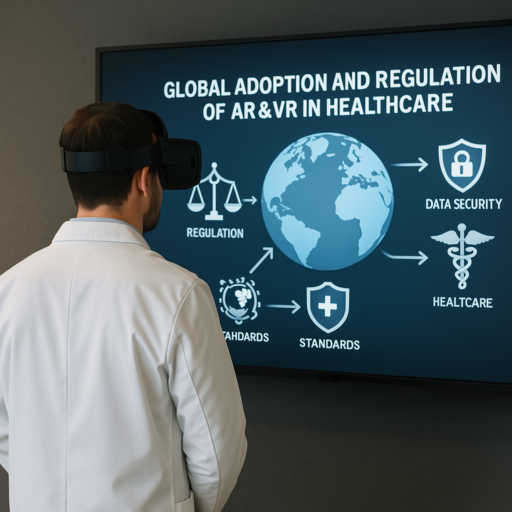
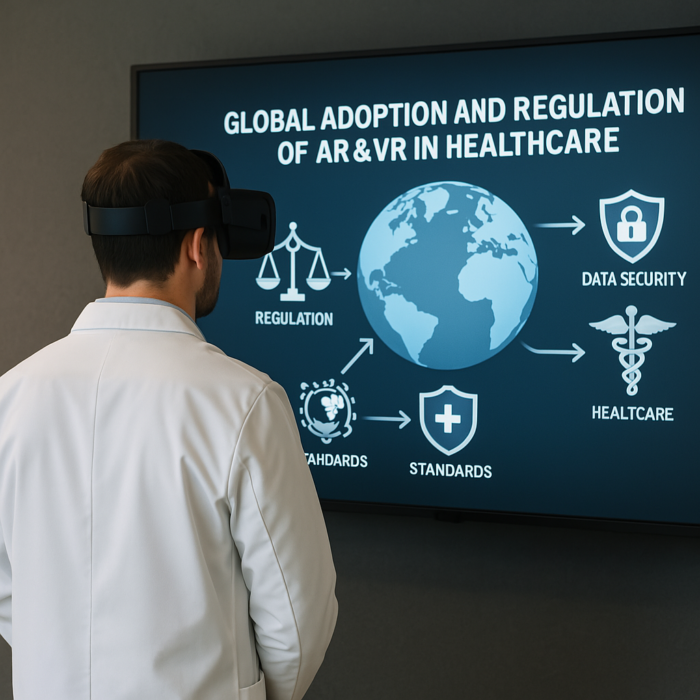
The integration of Augmented Reality (AR) and Virtual Reality (VR) in healthcare is a transformative step forward, but it also brings complex regulatory, ethical, and legal challenges. As these technologies advance, it is crucial to establish frameworks that ensure patient safety, data security, and equitable access. Below, we outline key areas of regulation and global adoption trends.
Key Regulatory Areas
- Data Protection and Cybersecurity
Patient Data Security: AR and VR tools frequently process sensitive medical data. Compliance with GDPR and HIPAA regulations is essential to ensure data privacy.
Cybersecurity Risks: The network-based nature of these technologies exposes them to cyber threats, making robust security protocols a necessity.
- Medical Device Certification
If AR and VR systems are used for diagnostic or therapeutic purposes, they must be classified as medical devices and undergo rigorous certification, such as FDA or EMA approval.
- Ethical Considerations
Patient Safety: These technologies must be tested to ensure they do not pose risks in critical medical applications.
Equal Access: Regulations must ensure that AR and VR solutions are not limited to elite hospitals but are accessible across various healthcare settings.
- Professional Standards and Training
Medical Training Requirements: Healthcare professionals using AR and VR must receive adequate training, and usage guidelines must be standardized.
Operational Protocols: Clear protocols should define when and how these technologies can be applied in clinical practice.
- Liability and Accountability
Responsibility for Errors: Defining liability in case of misdiagnosis or system failure is critical. Should responsibility fall on the manufacturer, healthcare provider, or institution?
AI-Driven Decision-Making: If these technologies integrate artificial intelligence, accountability for AI-generated medical decisions must be explicitly defined.
- Intellectual Property and Licensing
Protecting patents and software rights is crucial, particularly for companies developing global AR and VR healthcare solutions.
- International Standardization
Harmonizing regulations across different countries ensures global interoperability, reducing barriers to adoption and implementation.
Global Adoption Trends
The adoption of AR and VR in healthcare varies significantly across regions. Developed nations like the United States and Western Europe lead in technological advancements and funding, while developing countries focus on cost-effective applications that improve healthcare accessibility.
Leading Markets
United States: AR and VR are widely used in medical training, surgical simulations, and mental health therapy, driven by strong investment and digital infrastructure.
Europe: Countries like Germany and the UK support innovation through regulatory incentives and funding for healthcare technology.
China & South Korea: Rapid adoption in telemedicine and rehabilitation programs, addressing the needs of large patient populations.
Emerging Markets
India & Brazil: AR and VR adoption is growing, especially in telemedicine, where low-cost digital solutions improve healthcare access.
Africa & Southeast Asia: Adoption remains limited, but scalability and affordability could drive future expansion.
The Future of AR and VR in Healthcare
These technologies are reshaping medical education, treatment, and patient engagement. By enhancing diagnostic precision and providing immersive rehabilitation experiences, AR and VR empower both healthcare professionals and patients.
As artificial intelligence and machine learning become further integrated, personalized treatments and faster recovery times will become more common. Expanding access to AR and VR—especially in developing regions —will play a critical role in making high-quality healthcare available to all.
By addressing regulatory, ethical, and economic challenges, AR and VR can revolutionize global healthcare, making it more efficient, equitable, and innovative for everyone.