The rapid advancement of digital technologies has brought revolutionary changes to healthcare services. The integration of data analytics, artificial intelligence (AI), telemedicine, and innovative medical devices is significantly enhancing the efficiency and quality of healthcare while creating new opportunities for both patients and healthcare professionals.
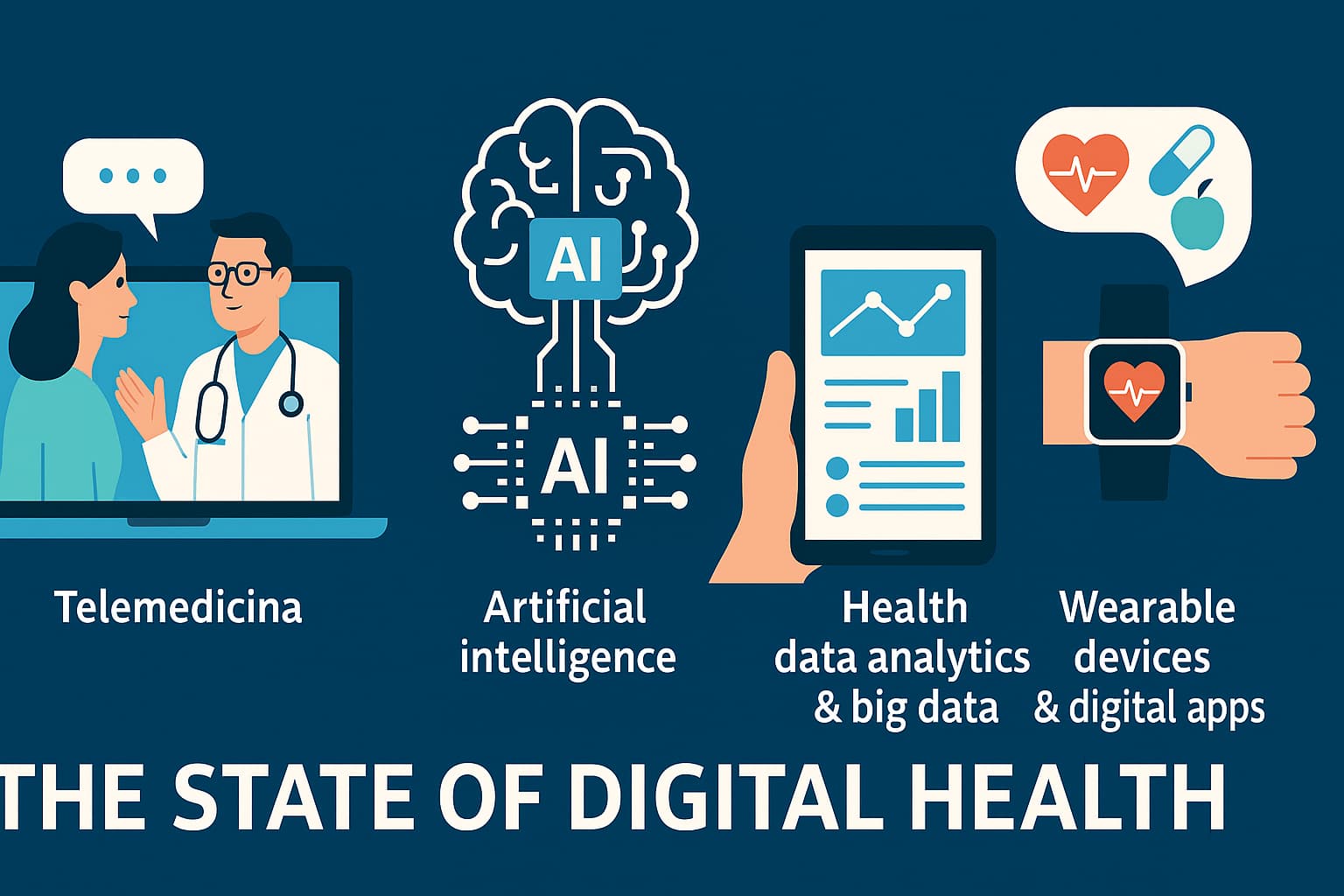
Telemedicine: A new dimension of care
Teleconsultation options allow patients to access healthcare services conveniently and without geographical constraints. Telemedicine played a crucial role during the COVID-19 pandemic and has since become an essential part of healthcare delivery. Intelligent remote diagnostic systems and wearable devices continuously collect patient data, enabling healthcare providers to proactively respond to changes in patient conditions.
Artificial intelligence in healthcare
AI is playing an increasingly significant role in medical diagnostics, healthcare data analysis, and predictive modeling. Algorithms can rapidly and accurately analyze medical data, assisting doctors in decision-making, reducing the likelihood of errors, and accelerating treatment processes. AI is also revolutionizing drug development by facilitating the faster and more precise assessment of new active ingredients and their efficacy.
Healthcare data analytics and big data
Processing and analyzing vast amounts of patient data contributes to the development of personalized treatment plans. Big data solutions help doctors detect diseases earlier and design more effective therapies, ultimately reducing healthcare costs and improving treatment efficiency.
wearable devices and digital applications
Smartwatches, fitness trackers, and other wearable technologies enable users to continuously monitor their health. These data are not only valuable for patients but also provide healthcare professionals with insights to develop personalized healthcare strategies.
Challenges in digital healthcare
Despite technological advancements, several challenges remain, particularly in data protection and equal access to healthcare services. Ensuring the security of sensitive health data is crucial while also guaranteeing that digital solutions are accessible to all segments of society.
Future directions
The expansion of digital healthcare solutions is opening new horizons in prevention, patient engagement, and improving the efficiency of healthcare systems. Artificial intelligence, automated diagnostics, and advanced medical technologies are continuously transforming healthcare delivery, paving the way for a more patient-centered and innovative system.